Blog
Zadar in October: What's Still Open and Worth Doing Off-Season
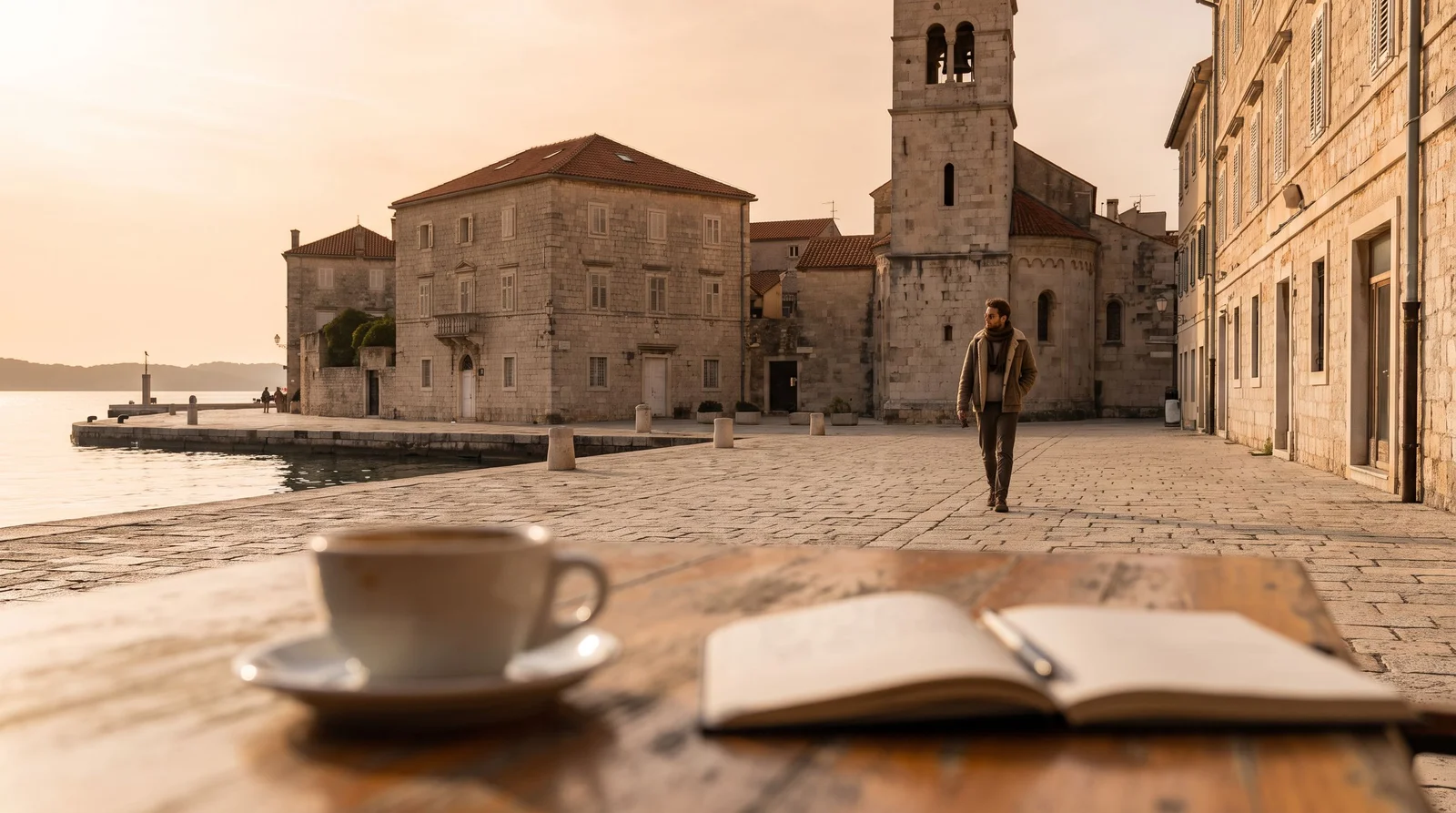
Every August, Zadar's old town fills to the brim with sunburnt crowds queueing for ice cream and jostling for a spot on the Sea Organ steps. Come October, that same stretch of waterfront empties out, the air cools to something genuinely pleasant for walking, and the city quietly becomes, in the opinion of plenty of people who live here, the best version of itself. If you're weighing up whether an autumn trip to Zadar is worth it, the short answer is yes — but it helps to know exactly what's still running, what's closed for the season, and how to plan around it so you don't show up expecting a July experience and find half the beach bars shuttered.
What the Weather and Sea Are Actually Like
October in Zadar sits in a comfortable middle ground. Daytime air temperatures typically run from the high teens to low-to-mid twenties Celsius (roughly 65-75°F), dropping into the low teens at night. Early October still carries a lot of late-summer warmth, especially in the first two weeks, while the back half of the month leans noticeably more autumnal, with cooler mornings and the occasional day of proper Adriatic wind and rain. Pack layers rather than committing fully to summer or winter clothing.
The sea is the pleasant surprise. The Adriatic holds onto its summer warmth for a long time, and sea temperatures in early-to-mid October commonly sit around 20-22°C (68-72°F), which is swimmable for anyone who isn't especially sensitive to cooler water. By late October it usually drops closer to 18-19°C, still fine for a quick dip on a sunny afternoon, particularly at sheltered spots. Locals who swim year-round will tell you October is one of the most underrated swimming months precisely because the water is warmer than the air feels like it should allow.
Rain does become more frequent than in July or August, but it tends to arrive as short, heavier spells rather than days of constant drizzle, and bright, clear, breezy days are still the norm more often than not. The jugo and bura winds, the two defining winds of the Dalmatian coast, are more active in autumn, so if a ferry or boat trip is on your agenda it's worth building in a flexible day or two in case of cancellations due to wind.
The Sea Organ and Greeting to the Sun Without the Crowds
Zadar's two signature attractions, the Sea Organ (Morske Orgulje) and the Greeting to the Sun (Pozdrav Suncu), are free, outdoor, and open every day of the year, which makes them perfect off-season material. The Sea Organ is a set of stone steps with pipes underneath that turn wave motion into soft, resonant musical tones, and in summer it's often so crowded that actually sitting down to listen for more than a minute is a challenge. In October you can simply sit on the steps, undisturbed, and let the sound of the sea do its work for as long as you like.
The Greeting to the Sun, a circular installation of solar-powered glass panels set into the pavement a short walk further along the promenade, lights up after dark in shifting colour patterns synced with the rhythm of the Sea Organ. It's genuinely one of the best sunset-into-evening spots on the whole Croatian coast, and in autumn, when sunset moves earlier into a more sociable early evening slot (typically between 6pm and 7pm through October), you get the full show without elbowing for a viewing position among hundreds of other visitors.
This pairing — sunset at the Sea Organ, lights at the Greeting to the Sun — is worth treating as a daily ritual rather than a one-off tourist stop if you're staying more than a couple of nights. The light is different every evening depending on cloud cover, and locals genuinely return to this stretch of waterfront repeatedly rather than treating it as a box to tick once.
Which Beaches, Restaurants and Bars Stay Open
Beach-wise, the pebble and concrete beaches around the peninsula and at Kolovare remain fully accessible in October — there's no gate or season on a beach itself, only on the facilities attached to it. What does close down is the seasonal infrastructure: many of the rental sunbeds, kayak and SUP hire stalls, and beach bar kiosks wind down through late September and early October, so don't expect the full beach-club setup. What you do get is a quiet stretch of coast, good light for photos, and often that swimmable 20°C water with nobody else in it.
Restaurants in the old town and along Varaška and Trg Pet Bunara stay largely open through October, since this is where the genuine local dining scene operates year-round rather than the strictly tourist-season spots. Family-run konobas serving fresh fish, Dalmatian pašticada and local wine keep normal hours into autumn and, if anything, offer better service and no wait for a table compared with peak summer. It's the smaller, purely seasonal ice-cream kiosks and beachfront snack bars right on the sand that tend to close for the year around early-to-mid October, so plan your beach-day food around the town rather than the shoreline itself.
Cafés on the Riva and around the Forum remain busy with locals rather than tourists come October, which is arguably a better atmosphere if you want a real sense of the city rather than a purely holiday one. It's worth asking locally or checking ahead for any specific restaurant you have your heart set on, since a handful of places do close for a short off-season break in November — but October itself is still very much full operating season for the town's proper restaurants.
Museums, Sights and Indoor Options for Cooler Days
Zadar's historic core rewards an off-season visit precisely because its major sights — the Roman Forum, St Donatus' Church, the Cathedral of St Anastasia, and the city walls (a UNESCO World Heritage site) — are far easier to actually experience without having to navigate past tour groups. The Museum of Ancient Glass, the Archaeological Museum and the Gold and Silver of Zadar exhibition all keep their regular seasonal hours into October, generally with only a modest reduction in opening times compared with peak summer, and all make for a comfortable couple of hours indoors if a rain shower rolls through.
The Five Wells Square and Queen Jelena Madijevka Park next to it are particularly good in autumn light, with the park's greenery holding its colour well into October and far fewer people cutting through on their way elsewhere. If you enjoy a slower pace of sightseeing — actually reading the information panels, taking photos without a crowd in frame, lingering in a church rather than being swept through it — October is simply a more comfortable month to do it in than July or August.
For a half-day trip, the Nin lagoon and old town, about 20 minutes from Zadar, is also worth factoring in. Its salt pans and the small Church of the Holy Cross remain accessible year-round, and the shallow lagoon water here often stays mild into autumn, making it a nice pairing with a Zadar city day if you have a car.
Ferries, Day Trips and Getting to the Islands
This is the area where off-season travel needs the most attention. Zadar is the gateway to islands including Ugljan, Pašman, Dugi Otok, Molat and Silba, and while the core ferry and catamaran lines connecting Zadar to the larger, more populated islands (Ugljan and Pašman especially) run year-round with only modest schedule reductions, the more tourist-oriented summer routes to smaller islands and the national parks thin out considerably by October.
Telašćica Nature Park and Kornati National Park are both still reachable in October, but the frequency of tour boats and organised excursions drops sharply after the first couple of weeks of the month, and some private operators stop running trips altogether until the following spring. If a national park boat trip is a must-do for your visit, it's worth booking directly with an operator in advance and confirming they're still running on your dates, rather than assuming you can simply turn up at the harbour as you could in July.
The regular Jadrolinija ferry and catamaran lines to the inhabited islands remain the most dependable option throughout October, as these serve residents rather than tourists and operate on a proper year-round timetable. If wind disrupts a sailing — which happens more often in autumn than summer — services to the smaller islands are the first to be cancelled or delayed, so if island-hopping is central to your plans, give yourself a buffer day rather than booking a tight connection on your last morning.
Why an Autumn Stay Suits Families, Couples and Business Travellers Alike
October strips away the two biggest frustrations of a Zadar summer trip: heat that makes midday sightseeing uncomfortable, and crowds that turn every popular spot into a queue. For families, that means more flexibility with children's schedules, easier restaurant bookings without rigid reservations, and a beach day that doesn't require arriving at dawn to claim space. For couples, it's simply a quieter, more romantic version of the same city — better sunset views, calmer old-town streets, easier dinner reservations.
For business travellers, October often lines up with a genuinely useful shoulder-season calendar: flights and accommodation are more reasonably priced than peak summer, the city isn't overwhelmed, and a work trip can comfortably include an evening at the Sea Organ or a walk through the old town without fighting through tourist traffic. A quiet apartment with reliable fast internet becomes more valuable in this context than in high summer, since autumn trips are as likely to mix some remote work with leisure time as they are to be pure holiday.
Practically speaking, this is also the point in the year where accommodation availability is far less of a scramble — booking even a week or two ahead, rather than months in advance as summer often demands, is usually enough to secure good apartment options close to the centre.
October in Zadar trades the intensity of summer for something arguably more rewarding: mild sea temperatures, comfortable sightseeing weather, open restaurants and museums, and a waterfront you can actually enjoy at your own pace. A little planning around ferry schedules and seasonal closures is all it takes to make the most of it. If you're considering these dates, get in touch and we'll help you plan a relaxing, well-timed stay in one of our apartments in Zadar.
Frequently asked questions
Is it warm enough to swim in Zadar in October?
Yes, particularly in the first half of the month. Sea temperatures typically range from about 18-22°C through October, which most people find comfortable for a swim, especially on sunny, calm afternoons.
Do the Sea Organ and Greeting to the Sun operate all year?
Yes, both are permanent, free, outdoor installations that work year-round regardless of season, and October is arguably the best time to enjoy them since the waterfront is far less crowded than in summer.
Are ferries to the islands still running in October?
Core routes to the larger, inhabited islands like Ugljan and Pašman run on a regular year-round schedule. Smaller tourist routes and national park excursion boats reduce significantly after early October, so book ahead if this is important to your trip.
What should I pack for a Zadar trip in October?
Layers are key: light clothing for warm, sunny afternoons, a jacket for cooler evenings and mornings, and swimwear if you plan to take advantage of the still-mild sea. A light rain jacket is also worth including.
If an uncrowded autumn stay in Zadar sounds appealing, our Studio and One-Bedroom Apartments are ready with fast fibre internet, free private parking and a welcome drink on arrival — ideal for a relaxed October getaway.
Check availability